
Swapping a cubicle for a view of the Pacific is no longer a fantasy. Tamarindo, on Costa Rica’s Guanacaste coast, has become one of the country’s favorite bases for remote workers: it is walkable, close to an international airport and full of restaurants, cafés and surf breaks for the hours after you log off. This guide from our local team covers what you need to know before you plan a stay of one month or more: entry rules, Costa Rica’s digital nomad visa, time zones, internet and how to choose the right furnished rental.
Why Tamarindo works for remote workers
- Easy access: Guanacaste Airport in Liberia (LIR) receives direct flights from many US and Canadian cities, and the drive to Tamarindo takes roughly an hour and a quarter. See our guide to getting from Liberia to Tamarindo.
- Everything nearby: supermarkets, pharmacies, gyms, yoga studios, surf schools and dozens of restaurants are within walking distance of central Tamarindo.
- A real routine: sunrise surf, a focused morning of work, and a sunset walk on the beach is a daily rhythm many of our long-stay guests fall into within a week.
Time zone: an easy overlap with North America
Costa Rica stays on Central Standard Time (UTC−6) all year and does not use daylight saving time. That means Tamarindo matches US Central time from November to March and matches US Mountain time while the US is on daylight saving time. If your team is on the East Coast, you will be one or two hours behind; if it is on the West Coast, one or two hours ahead. Either way, a normal workday overlaps almost completely.
Entry rules: tourist stay or digital nomad visa?
Staying as a tourist
Visitors from many countries, including the United States and Canada, do not need a visa to enter Costa Rica. Since 2023, immigration officers can grant visa-exempt visitors a stay of up to 180 days, but the number of days is set at the border, so always check the stamp in your passport. You will usually be asked for proof of onward travel. A tourist stay does not allow you to work for a Costa Rican employer.
Costa Rica’s digital nomad visa
For longer or more formal stays, Costa Rica offers a remote worker visa created by Law 10008. According to current guidance from Costa Rican immigration lawyers, the main requirements are:
- Stable income from outside Costa Rica of at least US$3,000 per month for a single applicant, or US$4,000 per month when including family members.
- Health insurance that covers you (and any dependents) for the entire stay.
- Government fees: a US$100 application payment plus a US$90 document fee.
The visa is granted for one year and can be renewed once for an additional year. Holders do not pay Costa Rican income tax on the income they earn from abroad, can open a local bank account and can drive with their home-country license. Requirements can change, so confirm the details with Costa Rica’s immigration authority (DGME) or an immigration attorney before you apply. This article is general information, not legal advice.
Internet, power and staying connected
Reliable Wi-Fi is the first thing remote workers ask about, and rightly so. Our furnished monthly rentals include high-speed Wi-Fi and air conditioning, and we are happy to share details about the connection at the unit you are considering before you book. A few habits make life easier:
- Carry a backup. A local prepaid SIM card from one of Costa Rica’s mobile carriers (Kölbi, Claro or Liberty) lets you hotspot from your phone if the Wi-Fi drops during an important call.
- Expect the odd storm. During the green season, afternoon thunderstorms can cause brief power or internet interruptions. A small battery pack for your router and laptop is worth the luggage space.
- Bring the right plugs. Costa Rica uses 120-volt power with the same plug types as the US and Canada.
Choosing the right monthly rental
For stays of a month or more, the right home matters more than the right hotel. Think about:
- A dedicated workspace: a dining table or desk away from the bedroom, with good light and a comfortable chair.
- Location: central Tamarindo lets you walk to everything; Playa Langosta is quieter; the hills above town offer breezes and views. Our guide to the best areas to stay in Tamarindo compares each one.
- Kitchen and laundry: after the first week, you will cook more than you expect.
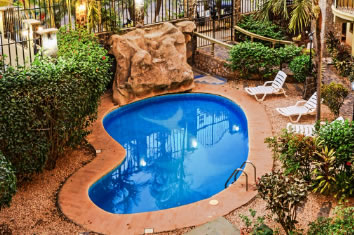
- Pool and security: many of our condos are in gated communities with shared pools.
Horizon Pacific offers furnished long-term and monthly rentals in Tamarindo for stays of 1 to 12 months, with local support from our team and optional cleaning and concierge services. Monthly rates are usually much lower than nightly vacation rates.
When to come
The dry season (roughly December to April) brings sunshine almost every day and the busiest months in town. The green season (May to November) brings afternoon showers, lush landscapes, fewer crowds and better availability for longer stays. Read why we love Guanacaste in the green season.
Daily life tips for a long stay
- Getting around: most errands in town can be done on foot or by bike; a car or golf cart helps if you stay in the hills. See getting around Tamarindo.
- Money: the local currency is the colón, but US dollars and cards are widely accepted in Tamarindo.
- Safety: use the same common sense you would at home. Our honest guide to Tamarindo safety covers the basics.
- Weekends: use them to explore. Our list of day trips from Tamarindo includes volcanoes, waterfalls and wildlife refuges.
Plan your remote work stay in Tamarindo
Tell us your dates, how many people are traveling and what you need from a workspace, and we will match you with the right furnished condo or home. Request availability for a monthly rental or contact our team in Tamarindo.